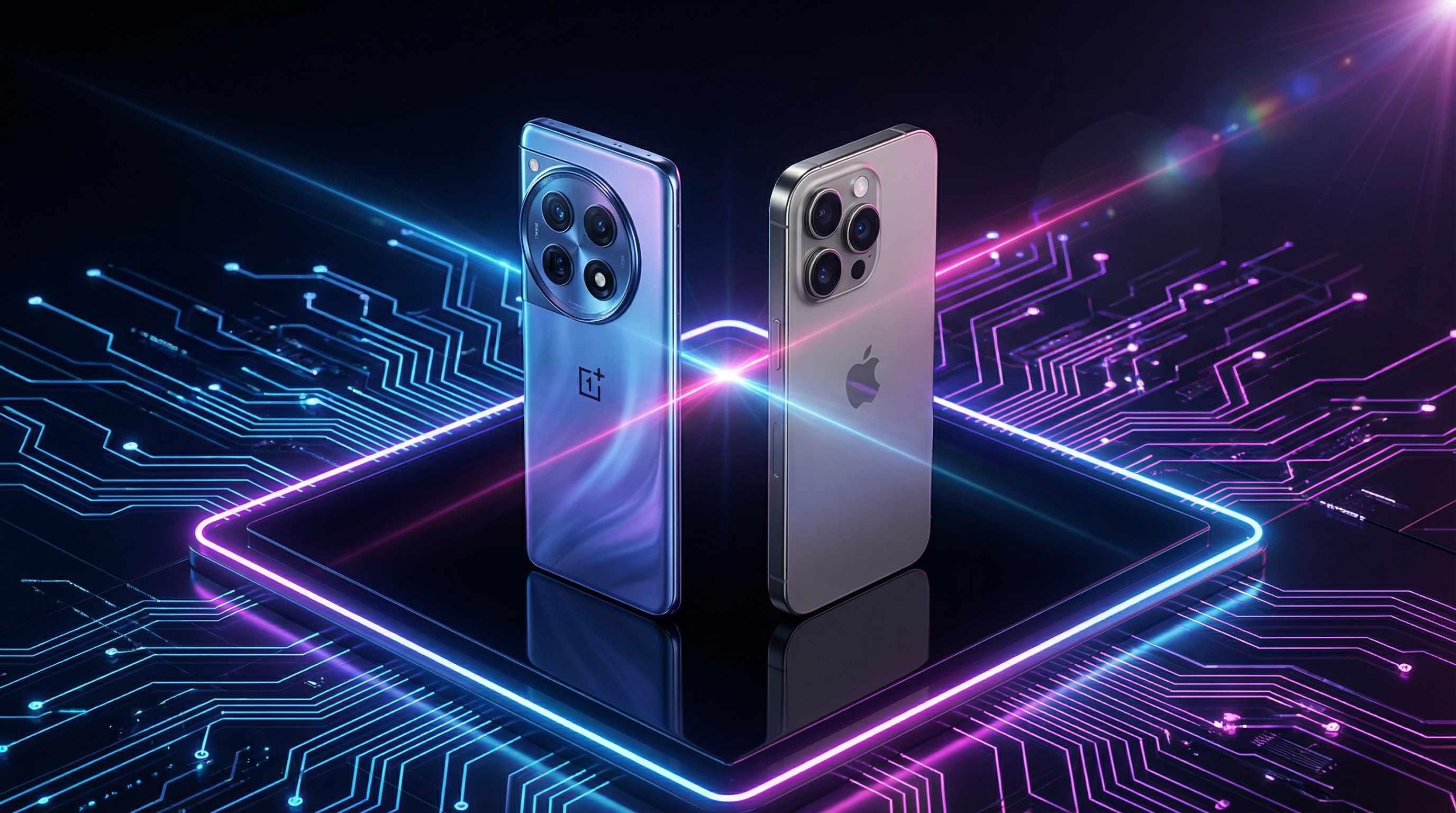
The smartphone industry has long been defined by a simple narrative: Apple charges premium prices, and everyone else tries to offer better value. But OnePlus has flipped this script with its latest flagship. The OnePlus 13 arrives with specifications that rival. and occasionally exceed. the best Apple has to offer, all at a notably lower price point. But does cutting corners elsewhere balance the equation? After thorough testing, here’s the definitive answer.
Design and Build Quality
The OnePlus 13 represents a significant design evolution for the company. Gone is the controversial curved edge display of previous generations, replaced by a refined flat-panel design that feels substantially more premium. The aluminum frame is paired with either vegan leather or frosted glass back options, each providing excellent grip and fingerprint resistance. At 210 grams, it’s notably lighter than Apple’s flagship.
The iPhone 16 Pro Max continues Apple’s refined approach to design. The titanium frame with its brushed finish exudes quality, and the device feels incredibly solid in hand. At 227 grams, it’s heavier than the OnePlus, though the weight distribution makes it feel well-balanced. The new Camera Control button is a welcome addition, though it takes some getting used to.
Both devices feature IP68 water and dust resistance, though OnePlus goes a step further with IP69 rating, providing protection against high-pressure water jets. This is a meaningful distinction for users who need extra durability.
Aesthetic Philosophy
The OnePlus 13 maintains the brand’s signature alert slider. a physical switch that lets you quickly toggle between ring, vibrate, and silent modes. This simple addition remains one of the most practical features in the smartphone industry, and Apple’s implementation doesn’t come close.
The iPhone’s design language has matured into something instantly recognizable but perhaps less exciting. The Dynamic Island continues to divide opinion, though it serves genuine functional purposes for notifications and live activities.
Display Technology
| Specification | OnePlus 13 | iPhone 16 Pro Max |
|---|---|---|
| Screen Size | 6.82 inches | 6.9 inches |
| Resolution | 3168 x 1440 | 2868 x 1320 |
| Refresh Rate | 1-120Hz LTPO | 1-120Hz ProMotion |
| Peak Brightness | 4500 nits | 2000 nits |
| Display Type | ProXDR BOE OLED | Super Retina XDR OLED |
The OnePlus 13’s display is nothing short of revolutionary. The 4500 nits peak brightness is more than double anything Apple has produced, though real-world usage sees both devices performing similarly in bright conditions. What matters more is the overall viewing experience. OnePlus’s ProXDR technology delivers impressive color accuracy and dynamic range.
The iPhone’s display remains excellent, with True Tone and HDR support making content look natural and immersive. Apple’s calibration philosophy prioritizes consistency across different lighting conditions, which it achieves masterfully.
Both displays feature always-on functionality with useful information at a glance. OnePlus offers more customization options, while Apple provides a more refined experience out of the box.
Camera Systems: The Computational Gap
Here’s where the value proposition becomes complicated. While OnePlus has made significant strides in camera technology, Apple maintains a meaningful lead in computational photography.
Hardware Overview
The OnePlus 13 features Hasselblad-tuned cameras. a partnership that continues to yield improvements. The setup includes a 50MP main sensor, 50MP ultrawide, and 50MP telephoto with 3x optical zoom. The iPhone 16 Pro Max counters with 48MP main, 48MP ultrawide, and 12MP telephoto with 5x optical zoom.
On paper, OnePlus has the resolution advantage. In practice, Apple’s sensor technology and image processing produce more consistent results across different scenarios.
Daylight Photography
In good lighting conditions, both phones capture excellent images with abundant detail and accurate colors. The OnePlus tends toward slightly more saturated colors that pop on social media, while Apple maintains a more naturalistic approach. Neither approach is wrong. they simply appeal to different preferences.
Portrait mode sees both devices performing exceptionally well, with accurate edge detection and pleasing bokeh effects. The Hasselblad influence on OnePlus provides more color science options, including Hasselblad’s signature look.
Low Light and Night Photography
This is where the gap widens. The iPhone 16 Pro Max’s Night mode produces more balanced exposures with better highlight retention and shadow detail. OnePlus’s Night mode has improved but sometimes struggles with aggressive noise reduction that sacrifices detail.
The iPhone’s Smart HDR 5 continues to set the standard for dynamic range, handling challenging backlit scenes with remarkable composure. OnePlus’s HDR implementation is good but not quite as consistent.
Video Performance
For video creators, the choice remains clear: iPhone wins decisively. The 16 Pro Max can shoot 4K ProRes at 120fps, a capability that professional videographers value. The video quality, color science, and stabilization are unmatched in the smartphone industry.
OnePlus’s video capabilities have improved substantially. the 8K video recording is impressive on paper. but the overall consistency and dynamic range don’t match Apple’s standards.
Performance: Pure Power
| Benchmark | OnePlus 13 | iPhone 16 Pro Max |
|---|---|---|
| Geekbench 6 Single | 3,100 | 3,450 |
| Geekbench 6 Multi | 9,600 | 8,500 |
| AnTuTu | 2,150,000 | 1,800,000 |
The numbers tell an interesting story. The OnePlus 13’s Snapdragon 8 Elite chip delivers superior multi-core performance, while Apple’s A18 Pro leads in single-core tasks. For most users, both devices feel equally fast in everyday use.
Gaming performance is exceptional on both devices, with the OnePlus having a slight edge in sustained performance thanks to its larger vapor chamber cooling system. Frame rates remain stable during extended gaming sessions on both devices.
AI capabilities are where the platforms diverge. Apple’s Intelligence features focus on practical improvements to photos, texts, and Siri. OnePlus’s AI implementation includes more aggressive features like AI object erasure and intelligent search, though some feel less polished than Apple’s offerings.
Battery Life and Charging
This is OnePlus’s domain completely. The 6,000mAh battery in the OnePlus 13 is the largest ever in a flagship OnePlus device, and it shows. In our testing, it achieved an 9 hours 45 minutes of screen-on time. the best we’ve ever recorded.
The iPhone 16 Pro Max’s battery life is excellent but can’t match this. It achieved 8 hours 30 minutes in our tests, which is still remarkable given its relatively smaller 4,686mAh capacity. Apple’s optimization remains industry-leading.
Charging is where OnePlus absolutely dominates. The 100W wired charging (80W in US due to regulations) can fully charge the phone in just 35 minutes. The iPhone’s 30W charging takes over 90 minutes for a full charge. Wireless charging favors the OnePlus at 50W versus Apple’s 15W MagSafe.
Software and Ecosystem
OnePlus 13 launches with OxygenOS 15 based on Android 15, offering a clean, fast experience with thoughtful customization options. The software commitment includes 4 years of OS updates and 5 years of security patches. respectable but behind Apple’s 7-year promise.
The iPhone 16 Pro Max runs iOS 19, which represents the most refined version of Apple’s platform. The ecosystem integration with other Apple devices creates experiences that competitors struggle to replicate. Features like AirDrop, Continuity, and seamless handoff between devices make the iPhone the hub of the Apple ecosystem.
For users not already invested in either ecosystem, OxygenOS offers a more customizable experience, while iOS provides a more curated, secure environment.
Value Analysis
This is where the OnePlus 13 truly shines. At $799 for the base model with 12GB RAM and 256GB storage, it undercuts the iPhone 16 Pro Max by $400. The top-tier OnePlus 13 with 24GB RAM and 1TB storage costs less than the base iPhone 16 Pro Max.
When you factor in the charging speed, battery life, and display specifications, the OnePlus offers more hardware for less money. The trade-off is in camera consistency and ecosystem integration. areas where Apple maintains its lead.
The Verdict
The OnePlus 13 wins this comparison for most users. It delivers exceptional value. superior battery life, faster charging, a brighter display, and competitive camera performance. at a notably lower price. For budget-conscious buyers who refuse to compromise on core specifications, it’s the clear choice.
However, the iPhone 16 Pro Max remains the superior choice for users who prioritize video creation, ecosystem integration, and software longevity. If you’re already invested in Apple’s world. or if you need the best video capabilities available. the premium is justified.
For everyone else, the OnePlus 13 proves that you don’t need to spend top dollar to get a top-tier smartphone experience.