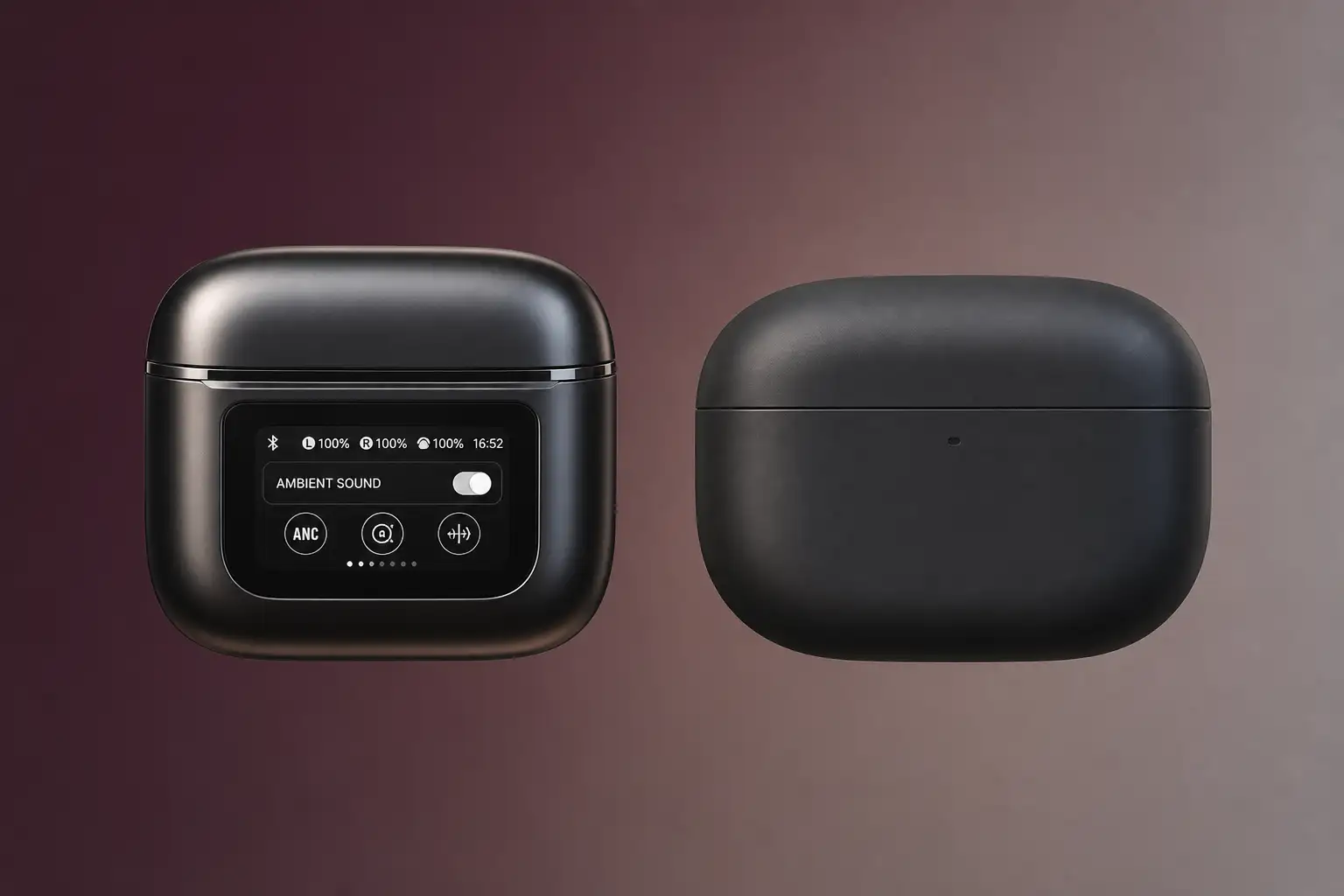
True wireless earbuds have spent the last five years converging on a similar formula: compact housings, active noise cancellation, multipoint Bluetooth, and companion apps loaded with EQ presets. Yet two products on the premium end of the market prove that convergence is far from complete. Sony’s WF-1000XM5 carries the reputation of the noise-canceling category forward into 2026, while JBL’s Tour Pro 3 arrives with a radical twist—a touchscreen smart case that doubles as a remote control, music player, and notification hub.
Both earbuds target audiophiles and commuters who want the best sound quality and noise cancellation in a pocketable package. Both cost roughly in the $250 to $300 range at launch, putting them squarely in the premium tier alongside Apple’s AirPods Pro and Samsung’s Galaxy Buds. The question is not whether either is good—both are excellent—but which one deserves your money. After spending several weeks with each pair across commutes, gym sessions, video calls, and critical listening, I have a clear recommendation.
Design and Build
The Sony WF-1000XM5 represents the fifth generation of Sony’s flagship true wireless line, and the refinement shows. Sony reduced the size by approximately 25 percent compared to the XM4, and the result is one of the most comfortable premium earbuds available. The housings are slightly oval, sitting flush in the ear canal with a low profile that does not stick out. Each bud weighs about 5.9 grams, and the pressure distribution feels even even during extended listening sessions. The foam-like polyurethane ear tips create a tight seal that also passively blocks ambient noise before the ANC microphones even kick in. Sony includes four tip sizes in the box, and the fit is secure enough for jogging and moderate gym work.
The JBL Tour Pro 3 takes a different approach. The earbuds themselves are slightly larger and heavier at roughly 6.3 grams per bud, with a stem design that echoes AirPods but with a more angular, geometric housing. The stems provide a natural grip point for touch controls, and the earbuds stay secure during movement. JBL includes silicone tips in three sizes, which is adequate but less granular than Sony’s four-size offering. The ear tips are good quality, though some users with smaller ears may find the housing bulk makes a perfect seal harder to achieve.
Where JBL radically diverges is the charging case. The Tour Pro 3’s case features a 1.45-inch OLED touchscreen on the front, running a custom JBL interface that lets you adjust volume, skip tracks, answer calls, manage ANC modes, check battery levels, and even play stored music directly from the case—all without touching your phone. It sounds like a gimmick until you use it. In practice, it is genuinely useful: fumbling for your phone on a crowded train or during a run becomes unnecessary. The case is thicker and heavier than Sony’s to accommodate the screen and its battery, measuring roughly 72 × 62 × 29 millimeters and weighing about 60 grams compared to Sony’s slimmer 39-gram case. Whether that tradeoff is worth it depends on your lifestyle.
Specifications at a Glance
| Specification | JBL Tour Pro 3 | Sony WF-1000XM5 |
|---|---|---|
| Weight (per bud) | ~6.3g | ~5.9g |
| Driver | 11mm dynamic | 8.4mm dynamic |
| Ear Tip Sizes | 3 (S, M, L) | 4 (SS, S, M, L) |
| Water Resistance | IP55 | IPX4 |
| Case Charging | USB-C, Qi wireless | USB-C, Qi wireless |
| Case Battery | ~8 additional charges (+ touchscreen power) | ~12 additional charges |
| Bluetooth | 5.3 | 5.3 |
| Codecs | SBC, AAC, LDAC | SBC, AAC, LDAC |
| Multipoint | Yes (2 devices) | Yes (2 devices) |
| ANC | Adaptive ANC with Auto Ambient | Industry-leading ANC with Auto NC Optimizer |
| Battery (buds + ANC on) | ~8 hours | ~8 hours |
| Battery (total with case) | ~32 hours | ~24 hours |
Sound Quality
Sound is where these two earbuds separate themselves in meaningful ways, and where personal preference matters most.
Sony’s WF-1000XM5 uses an 8.4mm dynamic driver that Sony calls the “Dynamic Driver X.” Despite being smaller than the 11mm driver in the JBL, the Sony delivers a remarkably balanced, reference-grade sound signature out of the box. The bass is tight and controlled—present and impactful without bleeding into the mids. Vocal reproduction is natural and forward, making the XM5 particularly well-suited for acoustic, jazz, vocal-heavy pop, and podcast content. The treble is detailed without being harsh, though a few listeners may find the upper frequencies slightly bright at higher volumes. Sony’s LDAC codec support means that paired with an Android device, you can stream up to 990 kbps, approaching near-lossless quality over Bluetooth.
The JBL Tour Pro 3, with its larger 11mm driver, produces a more energetic and bass-forward sound. The low end is deeper and more resonant, which makes hip-hop, EDM, and rock feel punchy and engaging. The mids are slightly recessed compared to the Sony, meaning vocals and acoustic instruments sit a bit further back in the mix. The treble is smooth and never fatiguing, which is a strength for long listening sessions. JBL also supports LDAC, so Android users get the same high-resolution streaming benefit. Out of the box, the JBL’s default tuning is more consumer-friendly and fun, while the Sony leans analytical and precise.
Both earbuds offer extensive EQ customization through their companion apps. Sony’s Headphones Connect app provides a five-band equalizer, a Bass Boost toggle, and several presets including Bright, Excited, Mellow, Relaxed, Treble Boost, Vocal, and Bass Boost. JBL’s Headphones app offers a similar parametric EQ with presets and a fully customizable graphic equalizer. With aggressive EQ tweaking, you can narrow the gap between the two sound signatures, but the fundamental driver character remains: the Sony is more balanced, the JBL is more energetic.
For pure critical listening accuracy, the Sony WF-1000XM5 has the edge. For casual, energetic listening where you want your music to feel alive and punchy, the JBL Tour Pro 3 delivers more visceral impact.
Noise Cancellation and Transparency
This is the category where Sony has historically dominated, and the WF-1000XM5 continues that tradition.
Sony’s ANC on the XM5 is, simply put, the best in the true wireless category. The combination of its dual noise sensor technology, the V2 processor, and the polyurethane ear tips creates a noise-canceling experience that is remarkably effective across the frequency spectrum. Low-frequency rumble from airplane engines and subway trains is reduced to a faint whisper. Mid-frequency chatter and office noise are substantially attenuated. High-frequency sounds like keyboard clicks and air conditioning hum are noticeably softened. The Auto NC Optimizer automatically adjusts ANC performance based on your ear shape, wearing conditions, and ambient pressure, so you do not need to manually fine-tune settings for different environments.
The JBL Tour Pro 3 employs adaptive ANC that adjusts based on your surroundings, and it is genuinely good—just not quite at Sony’s level. Low-frequency noise cancellation is strong, and the JBL handles consistent rumble well. Where it falls short is in mid-frequency attenuation. Human voices and irregular ambient sounds are more audible through the JBL than through the Sony. This is not a dealbreaker for most casual users, but if noise cancellation is your primary reason for buying premium earbuds, the Sony is the clear winner.
Transparency mode on the Sony is among the most natural-sounding implementations available. Ambient audio passes through with minimal processing artifacts, and voices sound clear and undistorted. The Speak-to-Chat feature automatically pauses music and activates transparency when it detects your voice, which works well in practice though it can occasionally trigger on coughs or humming. JBL’s ambient sound mode is functional but sounds slightly more processed, with a subtle digital quality to the passthrough audio. The JBL also offers a “True Adaptive” mode that blends ANC and transparency based on your environment, which is useful for walking in urban areas where you want to stay aware of traffic while still enjoying music.
Call Quality and Microphones
Both earbuds perform well on calls, though with different strengths.
The Sony WF-1000XM5 uses four beamforming microphones per earbud combined with an AI-based noise reduction algorithm learned from over 500 million voice samples. The result is clear, natural-sounding voice transmission with good suppression of background noise. Wind noise is well-controlled, and the Sony handles moderate background noise like café chatter or street traffic effectively. In very loud environments like busy train platforms, the Sony’s microphone performance is still passable but not exceptional.
The JBL Tour Pro 3 uses a three-microphone array per earbud with JBL’s VoiceAware technology, which lets you hear your own voice in the earbuds during calls so you do not end up shouting. Call clarity is good, with natural vocal reproduction and decent background noise suppression. The JBL actually has a slight edge in one specific area: the smart case can serve as a Bluetooth microphone itself, letting you leave the earbuds in the case and still take calls using the case’s built-in mics. This is an unusual but occasionally useful feature, particularly during workouts when you do not want earbuds in your ears but need to answer a quick call.
For most users, call quality on both earbuds will be more than adequate. The Sony edges ahead in noisy environments, while the JBL’s case-as-microphone feature adds flexibility.
Battery Life and Charging
Battery life is one area where the JBL Tour Pro 3 pulls ahead, though the Sony’s numbers are still respectable.
With ANC enabled, both earbuds deliver approximately 8 hours of playback from the buds themselves. This is excellent for true wireless earbuds in the premium category. Without ANC, the JBL stretches to about 10 hours while the Sony reaches about 12 hours.
The difference becomes more pronounced when you factor in the case. The JBL Tour Pro 3 case provides approximately four additional full charges, bringing total battery life to roughly 32 hours. The Sony case provides approximately three additional charges, for a total of around 24 hours. The JBL’s larger case houses a bigger battery, and the extra runtime is meaningful for travelers and heavy users who may not have access to a charger for several days.
Both support USB-C charging and Qi wireless charging. The JBL case’s touchscreen adds a small power draw, but JBL has engineered the screen to sleep aggressively when not in use, so it does not significantly impact overall battery life. A quick charge of 5 minutes gives about 1 hour of playback on both earbuds.
Smart Features and Software
This is where the JBL Tour Pro 3’s identity truly shines—and also where it reveals its limitations.
The touchscreen case is the star of the JBL experience. The 1.45-inch OLED display runs a custom interface that gives you direct access to playback controls, volume adjustment, ANC mode switching, notification viewing, and even a music player that can store and play songs directly from the case’s internal storage (yes, it has expandable storage via the JBL app). You can set alarms, use a timer, and customize the watch face. The screen is bright enough to read outdoors and responsive to touch, though the small size means typing is impractical and navigation requires some precision.
Sony’s approach is more conventional. The Headphones Connect app is polished and feature-rich, offering EQ controls, ANC optimization, 360 Reality Audio setup, DSEE Extreme upscaling toggles, and adaptive sound control that adjusts settings based on your activity and location. Sony also supports Speak-to-Chat, quick attention mode (covering the right earbud with your hand to temporarily let in ambient sound), and seamless switching between connected devices.
JBL’s Headphones app is also capable, with EQ customization, ANC management, and the ability to push music and playlists to the case’s storage. The app is slightly less polished than Sony’s, with occasional lag and a less intuitive layout, but it covers the essentials.
The smart case is not without drawbacks. It adds weight and bulk, the touchscreen can be accidentally activated in a bag or pocket (though a lock mode mitigates this), and it represents another screen to manage in your digital life. For users who are already screen-fatigued, the case’s novelty may wear thin after a few weeks. For users who value convenience and the ability to control audio without reaching for their phone, it is a genuinely useful innovation.
Comfort and Ergonomics
Comfort is subjective, but the Sony WF-1000XM5 has a clear advantage for most ear shapes. The lighter weight, smaller profile, and four-size tip selection mean that more users will find a comfortable, secure fit. I wore the Sony for four-hour stretches on flights without discomfort, and the pressure seal remained consistent.
The JBL Tour Pro 3 is comfortable for most users in shorter sessions, but the slightly heavier buds and three-size tip selection mean that some users, particularly those with smaller ear canals, may experience fatigue after two to three hours. The stem design does provide a convenient grip point for adjusting fit, and the earbuds stay secure during exercise, which is a plus.
Both earbuds are rated for water resistance, with the JBL’s IP55 rating offering better protection against dust and water jets compared to the Sony’s IPX4 (splash-resistant only). If you plan to use your earbuds during intense workouts or in rainy conditions, the JBL’s higher IP rating provides more confidence.
Price and Value
At launch, both earbuds typically retail in the $250 to $300 range, though frequent sales bring them closer to $200. The value proposition differs:
The Sony WF-1000XM5 justifies its price through class-leading ANC, excellent sound quality, superior comfort, and a polished app experience. If your priorities are noise cancellation and sound accuracy, the Sony delivers best-in-class performance.
The JBL Tour Pro 3 offers longer battery life, a more fun sound signature, better water resistance, and the unique smart case. If you value battery longevity, a bass-forward sound, and the convenience of the touchscreen case, the JBL offers features that no competitor matches.
The Verdict
The Sony WF-1000XM5 is the better true wireless earbud for most people. Its noise cancellation is unmatched in the category, its sound quality is more balanced and accurate, its comfort is superior for extended wear, and its app ecosystem is more polished. For commuters, travelers, and anyone who prioritizes the ability to block out the world while enjoying music at its best, the Sony is the clear choice.
The JBL Tour Pro 3 is a compelling and genuinely innovative alternative. The smart case is not a gimmick—it is a thoughtful feature that solves real problems in specific situations. Combined with longer battery life, better water resistance, and a more energetic sound signature, the JBL is an excellent choice for Android users, gym-goers, and anyone who wants the convenience of controlling their audio without pulling out their phone.
If you buy based on pure audio performance and noise cancellation, get the Sony WF-1000XM5. If you buy based on features, battery life, and the novelty of the smart case working as a standalone audio controller, the JBL Tour Pro 3 will delight you. Both represent the best of what their respective brands can offer, and the real losers are the sub-$100 earbuds that cannot compete with either of these.